
Epoxy Flooring
Epoxies have long been one of the most popular and versatile floor coatings for virtually every type of commercial and industrial enterprise. “Versatile” is a term often used for epoxy floor coatings because, depending on the exact product, they can be used for virtually every different layer of a floor coating system, such as a primer coat, grout coat, build coat or topcoat.
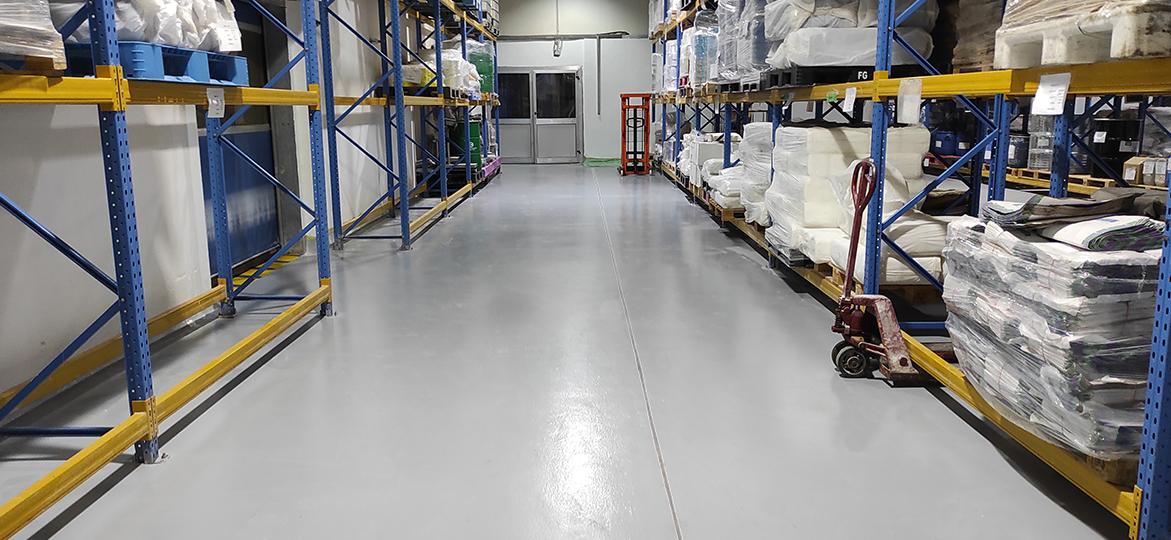
What Is Epoxy Flooring?
Epoxy flooring is a type of resinous flooring. In the mid-twentieth century, epoxy was the most successful resin used in flooring applications because of its durability and superior adhesive capabilities. Resinous flooring also includes methyl methacrylate (MMA), polyaspartic, polyester, polyurethane, and vinyl ester products. Each chemistry has its pros and cons.
Types of Resinous Flooring:
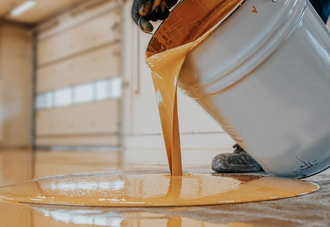
No matter what resin chemistry is used, resinous flooring products fall into three basic types: Coatings (0.1-0.6 mm), Self-Leveling (3-5 mm), and Mortars (5-25+ mm).1. Coatings are typically pure resins without any fillers, except for possible texture additives used to improve wear or increase slip resistance.
2. Slurries incorporate a blend of aggregates to bulk up a resin, while still allowing for good flow and leveling during installation.
3. Mortars utilize a high aggregate-to-resin ratio (5:1).
The result is a stiff mixture that will not level or flow. “Damp sand” mortars require the highest applicator skill to install.
The greater the thickness of the resinous flooring type, the greater the durability and resistance to abuse.
Advantages & Disadvantages of Resinous Flooring:
Each chemistry will have its own set of advantages and disadvantages. For example, a vinyl ester has the highest chemical resistance but does not provide a desirable aesthetic value.Benefits of Resinous Flooring:
Resinous floor coatings bring significant advantages to commercial facilities, including:• Offers excellent durability.
• Protects substrate from chemicals and abuse.
• Enhances facility aesthetics.
• Provides added safety and slip-resistance.
• Is easy to clean and maintain.
• Resists staining.
Disadvantages of Epoxy Flooring:
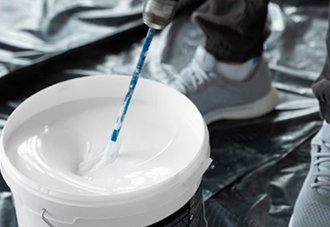
A main disadvantage of epoxy flooring is that it requires greater surface preparation than what people outside the industry might expect. In fact, the number one reason for coating failure is lack of, or improper, surface preparation. Even if the resinous floor coating is installed perfectly, it won’t last long if the substrate preparation is inadequate.Another disadvantage of epoxy flooring is the potential for mixing errors. The final phase of chemistry in epoxy flooring is performed on the site where part A is mixed with part B, setting off a thermal chemical reaction. The coating needs to be applied and finished within that coating’s working time. Because this final phase of chemistry is done on a job site, it is possible that mixing errors may occur. Therefore, working with a qualified installation contractor is the best route to success with epoxy flooring installations.
Commercial Resinous Floor Coating Applications:
Some industries and facilities that benefit the most from resinous floor coatings include:• Aircraft Hangars
• Chemical Storage
• Clean Rooms
• Commercial Kitchens
• Food and Beverage Processing
• Manufacturing
• Mechanical Equipment Rooms
• Pharmaceutical Facilities
• Restrooms
• Secondary Containment
• Shop Floors
• Warehouses
Epoxy Floor Coating Installation Basics
Make sure the substrate is a suitable canvas to create your artwork.• Decontamination Degrease, grind, removal, etc.
• Create Surface Profile: Grind or shoot-blast the surface. The greater the thickness of the coating finish will require a greater surface profile.
• Prime Coat: The application of a primer is designed to do two things, promote adhesion and seal the substrate. If it doesn’t seal the substrate, the following coatings will outgas leaving bubbles or voids. Squeegee and back-rolling is the preferred method. Squeegee application will help fill voids in the substrate. Back-rolling evens out the squeegee application.
• Intermediate Coat: The intermediate coat will usually be where the majority of the thickness will come from, most often consisting of cheaper resins filled with aggregate to extend the coverage. This step can be a coating, slurry, or mortar. A coating or slurry can be broadcasted with an aggregate for additional build and texture.
• Finish Coat: The finish coat typically consists of resins with greater chemical and/or UV resistance to provide the greatest aesthetics. Options can include smooth, stippled, satin, etc.
Resinous Flooring Maintenance – An Overview
Properly maintaining a finished resinous floor is crucial to achieving the longest life span. Dirt and debris that gets tracked in will abrade the surface over time with routine traffic. Sweeping and mopping the floors will keep them looking good for many years. Occasionally, degreasing as needed will keep contaminates from building up on the floors. Most areas can be easily cleaned by mopping with water and a pH-neutral cleaner.
Longevity of Epoxy Floors:
If the resinous floor is designed correctly for the anticipated traffic and abuse exposures, it should last ten years or greater. However, due to budget, limited time available required during installation, or if the abuse was greater than anticipated during the design, this isn’t always the case. The term “Value Engineered” is often used to modify a coating system to meet a budget and/or time restraint. When this happens, you should expect some type of compromise in aesthetics, durability, and/or longevity.It is important to note that resinous flooring is one of the few floor finishes that does not have to be removed and replaced when it gets old; old floors can be rejuvenated by installing another finish coat. In other words, the old floor doesn’t have to go into a landfill like other flooring such as carpet, sheet vinyl, vinyl composite tile, etc.
The Industry-Leading Epoxy Flooring Applicator:
G-Floor’s technical representatives and approved installers will ensure your epoxy flooring is designed and applied according to your needs and specifications. When you work with G-Floor, we guarantee you'll get the perfect flooring for your facility that will resist wear and damage for years to come. Reach out and contact us today to learn more about how we can help with your epoxy flooring needs!Flooring FAQ
Is epoxy flooring a good idea?
Epoxy flooring is a safe, durable, low-maintenance flooring option for commercial and industrial facilities where both durability and aesthetics are important.
How thick is epoxy floor coating?
Most epoxy and resinous floor coatings range from 0.2-0.6 mm.
How thick is epoxy floor Self Leveling?
Most epoxy self-leveling floors range from 3-5 mm.
How do you maintain an epoxy floor?
Mopping with water and occasionally a pH-neutral cleaner is usually enough to keep the epoxy floor looking new. Heavy soiling may call for scrubbing with a heavy-duty degreaser followed by a water rinse.
Do epoxy floors scratch easily?
Epoxy resins are typically very hard and can scratch fairly easily. We address this by using a finish coat with higher abrasion resistance, such as a polyurethane—and we can even add an abrasion-resistant additive to improve the scratch resistance.
Do epoxy floors crack?
Most epoxy floor cracking is caused by concrete substrate cracking. The coating system is only as good as the integrity of the substrate. There are ways to mitigate substrate cracking by correctly detailing the cracks and using flexible resins to bridge the movement.
Is epoxy flooring slippery when wet?
Smooth resinous or epoxy floors can become slippery when wet. However, the texture is added to provide skid resistance. The slip resistance can be customized in many ways to achieve a safe surface while keeping it easy to clean.
Does epoxy stop moisture?
Most epoxies have a very low perm rating, meaning that they do stop the passage of moisture. However, moisture vapor emission (MVE) is very problematic for most resinous flooring. It would be best to consult with G-Floor’s technical representative to help create a solution based on your particular job site conditions.
Is epoxy flooring waterproof?
Epoxy is waterproof. However, if the concrete moves and cracks, it will telegraph the crack through a ridged coating system. We utilize flexible resins as the base layer for areas that require waterproofing.
Is epoxy flooring cost-effective?
Epoxy flooring is very cost-competitive when compared to other floor finishes. If the coating system is designed correctly, it can actually lower the cost of cleaning and maintaining the floor.
Which is better, epoxy or tiles?
Epoxy flooring provides a more sanitary environment compared to tile. Epoxy completely seals the concrete surface, whereas tile is adhered to the surface with a setting mud or adhesive. This adhesive does not stop moisture permeation and can harbor bacteria under the tile and in the grout joints.
Is epoxy flooring cheaper than tile?
Epoxy flooring is usually slightly more expensive to install than Vinyl composite tile, but it is cheaper than ceramic tile. Epoxy flooring also offers additional cost benefits that tile flooring does not such as lower maintenance.
Can you epoxy over damaged concrete?
Most coating systems can be used to restore or repair damaged concrete. Repair materials and methods should be discussed with G-Floor’s technical representative for the best results.
Can you put new epoxy over old epoxy?
A well-bonded epoxy floor can be recoated with proper cleaning and preparation of the surface profile. However, there are a few resin chemistries that cannot be mixed with others. If you do not know what the chemistry is of the current floor coating, it is best to consult with G-Floor’s technical representative to prevent making a mistake.


